SENSEX Smart Open Interest Analysis | Live NSE Data
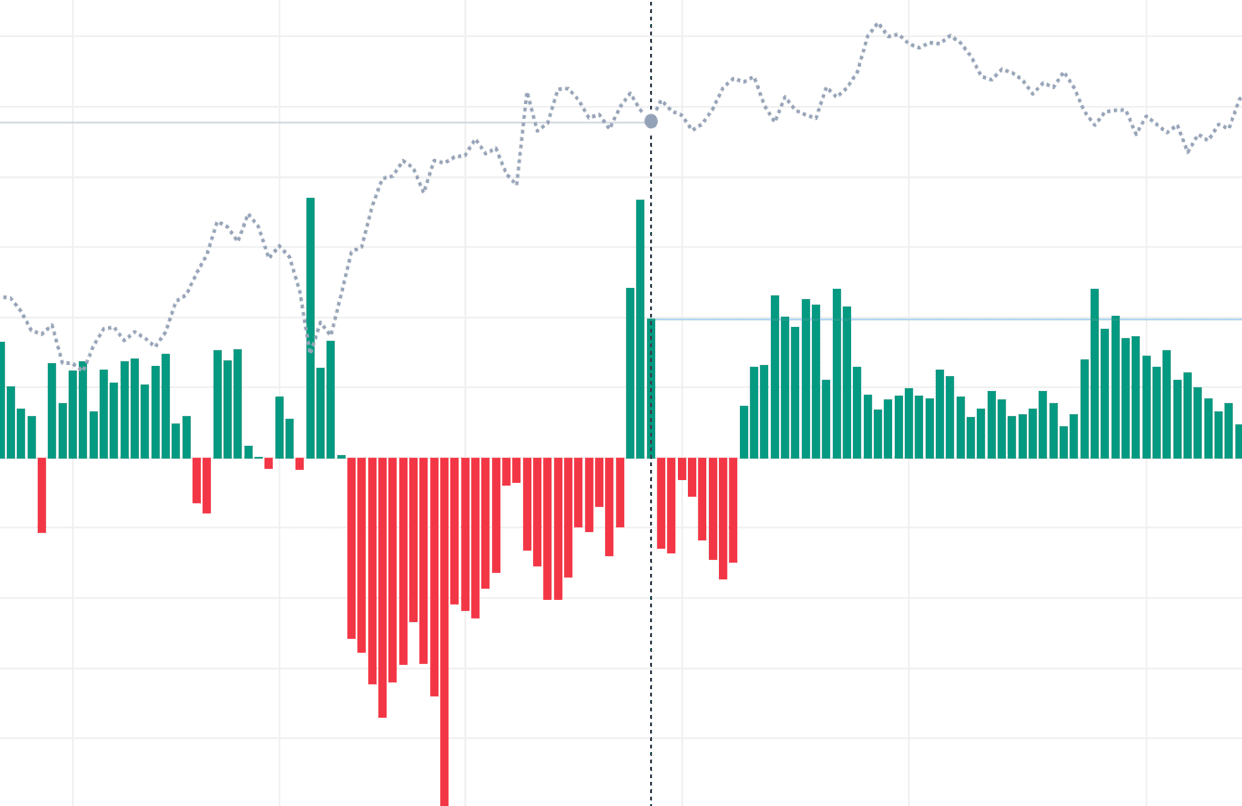
Analyze SENSEX Smart Open Interest to spot where institutional traders are positioning. Our tool scans OI buildup across every strike in the SENSEX option chain, automatically flagging zones of concentrated long and short activity. Instead of reading each strike manually, you see the high-conviction levels in seconds — a clear edge during fast-moving NSE sessions.
In SENSEX options, institutional flow often clusters into three or four adjacent strikes rather than a single strike. Smart OI identifies these clusters, highlights the dominant side (call writing vs put writing), and tracks how the zones shift intraday. When the call-writer zone starts unwinding while price approaches it, that's the typical pre-breakout signature for SENSEX. Put-writer zones, on the other hand, tend to act as durable support as long as OI keeps building.
How to use SENSEX Smart OI during a trading session
By 10:30 AM, Smart OI has usually identified the day's SENSEX institutional support and resistance zones. Traders can then structure intraday strategies — range-selling strangles between the zones, directional positions aligned with unwinding flow, or hedges when a key zone breaks. In historical mode you can replay any past SENSEX session to study how the institutional footprint evolved, which is valuable for back-testing and understanding pre-event positioning.
Pair Smart OI with our Live Option Chain, Max Pain Calculator, and Multi-Strike OI tools for a complete picture of theSENSEX F&O landscape across strikes and expiries.
BSE Sensex (SENSEX) Smart OI: Live vs Historical Modes
What live Smart OI shows for SENSEX
Live mode displays Smart OI signals updating in real time during NSE market hours. As fresh OI hits the market, the tool re-evaluates strike rankings and may show new flagged levels. This dynamic view is essential for active intraday trading on BSE Sensex — the signal landscape can shift multiple times per day.
Why historical mode matters for SENSEX
Historical mode lets you replay Smart OI for any past trading day. You select a date and see exactly which strikes were key on that day. This is invaluable for studying how key levels behaved before major SENSEX moves — were they respected? Broken? Ignored? The answers help calibrate your live interpretation.
Comparing past and present on SENSEX
A useful exercise: pick a recent BSE Sensex move and pull up the Smart OI from a few days before. What did it show? Did it predict the move? If yes, what specific patterns preceded the move? These retrospective studies build your pattern recognition far faster than live observation alone.
Building a SENSEX pattern library as of 29 September 2026
Over weeks of historical study, you accumulate a library of Smart OI patterns that preceded various types of moves. When today's live Smart OI starts looking similar to one of your library patterns, you have an informed guess about what is coming. This is how experienced traders develop intuition — through disciplined study of past data.
BSE Sensex (SENSEX) Smart OI: Pro Tips
Tip 1: track level evolution over days
Smart OI levels for BSE Sensex shift gradually. A strike that appears as key today may evolve into a dominant level over the next 3-4 sessions. Tracking this evolution (through the historical mode) gives you predictive insight — you can see momentum building before levels become unmistakably important.
Tip 2: watch for new SENSEX levels emerging
A new strike appearing in Smart OI that was not there yesterday is particularly valuable. It means fresh positioning is happening now. Whether it is a new support or resistance depends on the side. Either way, new levels deserve attention because they represent current market thinking.
Tip 3: cross-reference with FII data
For BSE Sensex, cross-referencing Smart OI with daily FII derivatives data (published by NSE) gives you institutional context. When Smart OI flags aggressive put writing and FII data shows FIIs net selling puts, you have strong institutional confirmation.
Tip 4: journal your SENSEX Smart OI observations
Write down daily observations: which levels were flagged, how they behaved, whether your trades aligned with them, and what happened next. Over 30-60 days this log becomes priceless. As of 29 September 2026, the trader who journals consistently outperforms the one who trades reactively without a written record. As a major Broad Market index on BSE, BSE Sensex rewards this discipline.
BSE Sensex (SENSEX) Smart OI on Expiry Day
Why Smart OI matters most on expiry day
Expiry day sees rapid OI changes — positions built over weeks unwind within hours. Smart OI tracks these fast-moving shifts and highlights which strikes still matter and which have been abandoned. Without Smart OI, you would be flying blind in the most volatile session of the cycle on BSE Sensex.
Reading SENSEX expiry-day patterns
On expiry day, watch for strikes being continuously defended (OI holding steady) versus strikes being rapidly abandoned (OI collapsing). Defended strikes are where pinning is likely. Abandoned strikes are no longer relevant. Smart OI updates its rankings throughout the day so your key levels stay current.
Pinning detection on SENSEX
A classic pinning setup appears when Smart OI shows one or two strikes with dramatically higher activity than all others. These are the strikes where market makers are hedging most intensely, and price often gravitates toward them. Trading strangles or straddles centred on the pinning strike is a common expiry-day strategy.
Risk management on SENSEX expiry as of 29 September 2026
Expiry day gamma risk is extreme. Use Smart OI to identify the safest strikes for premium selling (highest defended OI) and to set stops based on when key levels break. Never trade blindly on expiry day — always validate with Smart OI and other tools. The cost of a single mistake can exceed a week's normal profits.
SENSEX Open Interest Snapshot — 29 Sept 2026 Close
SENSEX futures ended the 29 Sept session at 73,365.7, down 0.15% from the previous close, after moving between 72,750 and 73,427.3. Futures OI added 5,220 through the day — the classic short buildup signature.
In the 1 Oct option series, call OI closed at 2.31 Cr (+57.23 L on the day) and put OI at 2.30 Cr (+1.09 Cr): both calls and puts attracted new OI, and the put side absorbed the larger share. The closing put-call ratio stood at 1, close to neutral territory between call and put writers.
| Data date | Tuesday, 29 September 2026 |
| Futures close | 73,365.7 (-0.15%) |
| Day range (futures) | 72,750 – 73,427.3 |
| Futures OI change | +5,220 |
| Call OI (close) | 2.31 Cr (+57.23 L on the day) |
| Put OI (close) | 2.30 Cr (+1.09 Cr on the day) |
| Put-Call Ratio (OI) | 1 |
| Call / Put volume | 26.42 Cr / 27.61 Cr |
| Lot size | 20 |
Data as of 2026-09-29 market close · 2026-10-01 expiry · same NSE feed as the chart above · refreshed with every site update. For educational purposes only, not investment advice.
Smart OI Detection: Video Walkthrough
SENSEX smart-money OI: quick reference
| Sudden OI surge | Likely actor | Smart-money read on SENSEX |
|---|---|---|
| Call OI jumps at a strike above spot | Call writers (sellers) | Fresh resistance ceiling — institutions expect SENSEX to stay capped below that strike |
| Put OI jumps at a strike below spot | Put writers (sellers) | Fresh support floor — institutions defending that level |
| Call OI jumps while price breaks higher | Call buyers | Directional long bet — old resistance can flip into a breakout target |
| Put OI jumps while price breaks lower | Put buyers / hedgers | Directional short or downside hedge — support below may not hold |
| Heavy OI unwinds at a wall as spot nears it | Writers covering | Support/resistance dissolving — classic pre-breakout or trap setup |
These reads are strongest when several adjacent SENSEX strikes light up together — a cluster signals a structured institutional position, not one-off retail flow. Treat a single strike as a hint and a zone as conviction. Always confirm the smart-money signal against price action before trading; OI shows where money is committed, not which way it will break.
How to use the Smart OI tool
- Select an underlying — Choose Nifty, BankNifty, or an F&O stock to monitor for institutional flow.
- Read the current Smart OI signal — Look at the live classification — long buildup, short buildup, unwind, or neutral — and the timestamp it was generated.
- Watch for signal transitions — A change from buildup to unwind (or vice versa) is more actionable than a continuing signal in the same direction.
- Cross-reference with price action — Compare the Smart OI signal with the underlying's chart — confirmation in both is the highest-confidence setup.
- Combine with PCR and Max Pain — Use PCR for sentiment context and Max Pain for the expiry-day target. Smart OI tells you when institutions are committing.
SENSEX Smart OI — Frequently Asked Questions
What is SENSEX Smart OI?
SENSEX Smart OI is an intelligent open interest analysis tool that automatically identifies significant OI levels, buildup patterns, and potential support/resistance zones based on OI concentration.
How does Smart OI help in SENSEX trading?
Smart OI for SENSEX highlights the most important OI levels automatically, saving time in analysis. It identifies where smart money is positioning and potential breakout/breakdown levels.
How do I tell smart-money call writing from call buying in SENSEX Smart OI?
In SENSEX Smart OI, a large call OI surge while price stays flat or falls signals institutional call writing — that strike becomes resistance. The same OI surge alongside a sharp price rise signals aggressive call buying, a directional long bet. Reading OI change together with price separates writers defending a level from buyers chasing a breakout.
What does a large sudden OI addition at a SENSEX strike mean?
A large sudden OI addition marks where smart money is committing capital. Heavy put writing below spot builds institutional support; heavy call writing above spot builds resistance. When that OI abruptly unwinds as SENSEX approaches the strike, the wall is dissolving — often a trap or pre-breakout signal rather than a level that will hold.
How often does SENSEX Smart OI update?
During NSE market hours (9:15 AM to 3:40 PM IST) SENSEX Smart OI recomputes per-strike OI changes on every option-chain refresh — typically every 1-3 seconds — so institutional flow appears as it develops. Outside market hours it shows the last session, and historical mode replays smart-money positioning for any past SENSEX expiry.