MIDCPNIFTY Smart Open Interest Analysis | Live NSE Data
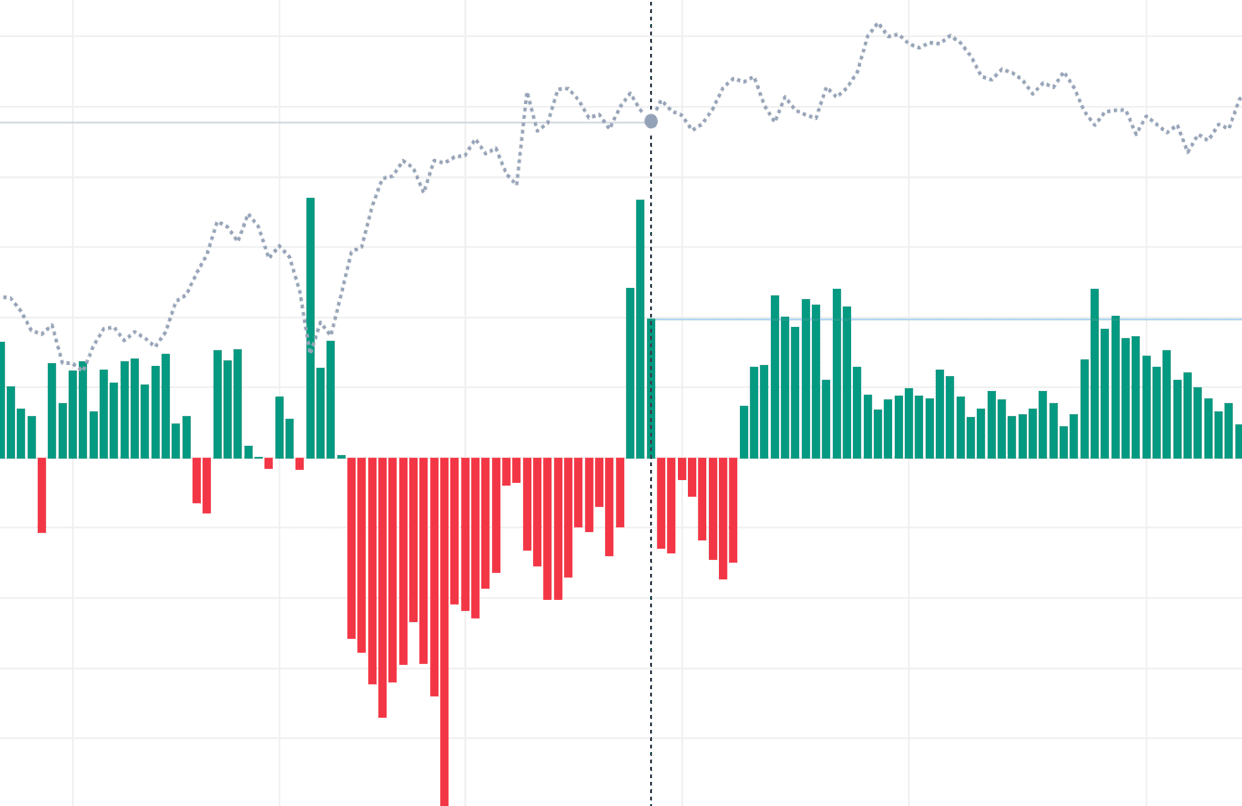
Analyze MIDCPNIFTY Smart Open Interest to spot where institutional traders are positioning. Our tool scans OI buildup across every strike in the MIDCPNIFTY option chain, automatically flagging zones of concentrated long and short activity. Instead of reading each strike manually, you see the high-conviction levels in seconds — a clear edge during fast-moving NSE sessions.
In MIDCPNIFTY options, institutional flow often clusters into three or four adjacent strikes rather than a single strike. Smart OI identifies these clusters, highlights the dominant side (call writing vs put writing), and tracks how the zones shift intraday. When the call-writer zone starts unwinding while price approaches it, that's the typical pre-breakout signature for MIDCPNIFTY. Put-writer zones, on the other hand, tend to act as durable support as long as OI keeps building.
How to use MIDCPNIFTY Smart OI during a trading session
By 10:30 AM, Smart OI has usually identified the day's MIDCPNIFTY institutional support and resistance zones. Traders can then structure intraday strategies — range-selling strangles between the zones, directional positions aligned with unwinding flow, or hedges when a key zone breaks. In historical mode you can replay any past MIDCPNIFTY session to study how the institutional footprint evolved, which is valuable for back-testing and understanding pre-event positioning.
Pair Smart OI with our Live Option Chain, Max Pain Calculator, and Multi-Strike OI tools for a complete picture of theMIDCPNIFTY F&O landscape across strikes and expiries.
Nifty Midcap Select (MIDCPNIFTY) Smart OI: Automated Key Level Detection
What makes a level "key" on MIDCPNIFTY?
A key level is one where market participants have committed significant capital. For Nifty Midcap Select, a key level usually has high total OI, recent fresh activity, and confirms with volume. Smart OI automatically finds strikes that meet these criteria so you do not have to build the analysis by hand.
How Smart OI ranks MIDCPNIFTY strikes
Internally, the tool scores each strike based on a combination of OI magnitude, recent change direction, and activity level. The highest-scoring strikes become the focus. This ranking updates in real time as new data arrives, so your key levels evolve through the session. Early-session levels may differ from closing levels as activity shifts.
Acting on Smart OI levels for MIDCPNIFTY trades
When Nifty Midcap Select approaches a Smart OI level, expect a reaction. Support levels often see bouncing activity. Resistance levels often face selling pressure. The reactions are not guaranteed — sometimes levels break — but the probability of a reaction is higher at Smart OI levels than at random strikes.
Reviewing MIDCPNIFTY Smart OI daily as of 26 July 2026
Make a habit of checking Smart OI at market open and market close. The open tells you which levels will likely matter today. The close tells you which levels matter for tomorrow. These two checkpoints are enough for most MIDCPNIFTY trading workflows.
Nifty Midcap Select (MIDCPNIFTY) Smart OI: Common Mistakes
Mistake 1: Treating Smart OI as a trade signal alone
Smart OI shows you where positioning is, not whether to trade it. Using it as a standalone trade signal without considering price action, context, or broader market conditions leads to inconsistent results. Always treat Smart OI outputs as one input among several for Nifty Midcap Select decisions.
Mistake 2: Ignoring time context
A Smart OI level that was dominant yesterday may be irrelevant today if price has moved far away from it. Always check whether the flagged strikes are still near current price. Stale levels that are now far from spot have diminished influence. The tool updates but you have to mentally adjust as well.
Mistake 3: Overreacting to single-session signals
One session of Smart OI data is noise. Patterns across 3-5 sessions are signal. Beginners often react to every daily shift and generate many low-quality trades. Wait for persistence before acting on a new signal. Single-session changes are usually reversed the next day on MIDCPNIFTY.
Mistake 4: Forgetting the event calendar on MIDCPNIFTY
Smart OI signals are less reliable around major events. Pre-event hedging distorts the positioning picture. Always check the economic and corporate calendar before trading Smart OI signals. As of 26 July 2026, a 2-minute calendar check prevents most event-driven losses on Nifty Midcap Select.
Nifty Midcap Select (MIDCPNIFTY) Smart OI: Support Zone Analysis
How Smart OI identifies MIDCPNIFTY support zones
Support zones on Nifty Midcap Select are strikes where put open interest is high and growing. Smart OI automatically flags these strikes as potential support levels. The tool prioritises strikes with both high OI and recent fresh positioning — indicating that put writers are actively defending the level, not just sitting on old positions.
Strong versus weak MIDCPNIFTY support
Strong support is a Smart OI strike with 3-5 sessions of sustained put writing and large total OI. Weak support has just one session of activity or thin overall positioning. Strong support typically holds; weak support often breaks. Smart OI gives you the data to distinguish between the two.
Trading MIDCPNIFTY bounces at support
When MIDCPNIFTY price falls to a Smart OI support level, watch for signs of a bounce. If fresh put writing is happening in real time (tool continues to flag the strike with fresh activity), the bounce is more likely. If put OI is unwinding, support may be breaking. Confirm with price action before entering long.
Stop-loss placement at MIDCPNIFTY support as of 26 July 2026
For long trades, place stops below the next Smart OI support level (not the one you entered at). If the second support also breaks, the entire support structure is failing. For Nifty Midcap Select this cascading approach keeps your stops rational rather than arbitrary.
MIDCPNIFTY Open Interest Snapshot — 24 Jul 2026 Close
MIDCPNIFTY futures ended the 24 Jul session at 14,462.85, up 0.28% from the previous close, after moving between 14,240 and 14,480.9. Futures OI shed 5.41 L through the day — the classic short covering signature.
In the 28 Jul option series, call OI closed at 1.06 Cr (-43,560 on the day) and put OI at 87.14 L (+8.80 L): put OI expanded while call positions were unwound, so writers leaned toward the downside strikes. The closing put-call ratio stood at a balanced 0.82, with neither side firmly in control.
| Data date | Friday, 24 July 2026 |
| Futures close | 14,462.85 (+0.28%) |
| Day range (futures) | 14,240 – 14,480.9 |
| Futures OI change | -5.41 L |
| Call OI (close) | 1.06 Cr (-43,560 on the day) |
| Put OI (close) | 87.14 L (+8.80 L on the day) |
| Put-Call Ratio (OI) | 0.82 |
| Call / Put volume | 6.91 Cr / 5.48 Cr |
| Lot size | 120 |
Data as of 2026-07-24 market close · 2026-07-28 expiry · same NSE feed as the chart above · refreshed with every site update. For educational purposes only, not investment advice.
Smart OI Detection: Video Walkthrough
MIDCPNIFTY smart-money OI: quick reference
| Sudden OI surge | Likely actor | Smart-money read on MIDCPNIFTY |
|---|---|---|
| Call OI jumps at a strike above spot | Call writers (sellers) | Fresh resistance ceiling — institutions expect MIDCPNIFTY to stay capped below that strike |
| Put OI jumps at a strike below spot | Put writers (sellers) | Fresh support floor — institutions defending that level |
| Call OI jumps while price breaks higher | Call buyers | Directional long bet — old resistance can flip into a breakout target |
| Put OI jumps while price breaks lower | Put buyers / hedgers | Directional short or downside hedge — support below may not hold |
| Heavy OI unwinds at a wall as spot nears it | Writers covering | Support/resistance dissolving — classic pre-breakout or trap setup |
These reads are strongest when several adjacent MIDCPNIFTY strikes light up together — a cluster signals a structured institutional position, not one-off retail flow. Treat a single strike as a hint and a zone as conviction. Always confirm the smart-money signal against price action before trading; OI shows where money is committed, not which way it will break.
How to use the Smart OI tool
- Select an underlying — Choose Nifty, BankNifty, or an F&O stock to monitor for institutional flow.
- Read the current Smart OI signal — Look at the live classification — long buildup, short buildup, unwind, or neutral — and the timestamp it was generated.
- Watch for signal transitions — A change from buildup to unwind (or vice versa) is more actionable than a continuing signal in the same direction.
- Cross-reference with price action — Compare the Smart OI signal with the underlying's chart — confirmation in both is the highest-confidence setup.
- Combine with PCR and Max Pain — Use PCR for sentiment context and Max Pain for the expiry-day target. Smart OI tells you when institutions are committing.
MIDCPNIFTY Smart OI — Frequently Asked Questions
What is MIDCPNIFTY Smart OI?
MIDCPNIFTY Smart OI is an intelligent open interest analysis tool that automatically identifies significant OI levels, buildup patterns, and potential support/resistance zones based on OI concentration.
How does Smart OI help in MIDCPNIFTY trading?
Smart OI for MIDCPNIFTY highlights the most important OI levels automatically, saving time in analysis. It identifies where smart money is positioning and potential breakout/breakdown levels.
How do I tell smart-money call writing from call buying in MIDCPNIFTY Smart OI?
In MIDCPNIFTY Smart OI, a large call OI surge while price stays flat or falls signals institutional call writing — that strike becomes resistance. The same OI surge alongside a sharp price rise signals aggressive call buying, a directional long bet. Reading OI change together with price separates writers defending a level from buyers chasing a breakout.
What does a large sudden OI addition at a MIDCPNIFTY strike mean?
A large sudden OI addition marks where smart money is committing capital. Heavy put writing below spot builds institutional support; heavy call writing above spot builds resistance. When that OI abruptly unwinds as MIDCPNIFTY approaches the strike, the wall is dissolving — often a trap or pre-breakout signal rather than a level that will hold.
How often does MIDCPNIFTY Smart OI update?
During NSE market hours (9:15 AM to 3:30 PM IST) MIDCPNIFTY Smart OI recomputes per-strike OI changes on every option-chain refresh — typically every 1-3 seconds — so institutional flow appears as it develops. Outside market hours it shows the last session, and historical mode replays smart-money positioning for any past MIDCPNIFTY expiry.