ICICIBANK Max Pain Today 2026 | Live NSE Calculator
Max pain for ICICIBANK is the strike price where the maximum number of option writers would inflict the most loss on option buyers at expiry. Historical NSE data on ICICIBANK expiries backs up the old market wisdom here: the underlying tends to gravitate toward this strike as expiry approaches, because option writers (who are mostly institutions) hedge their positions to push settlement toward the zone of least payout.
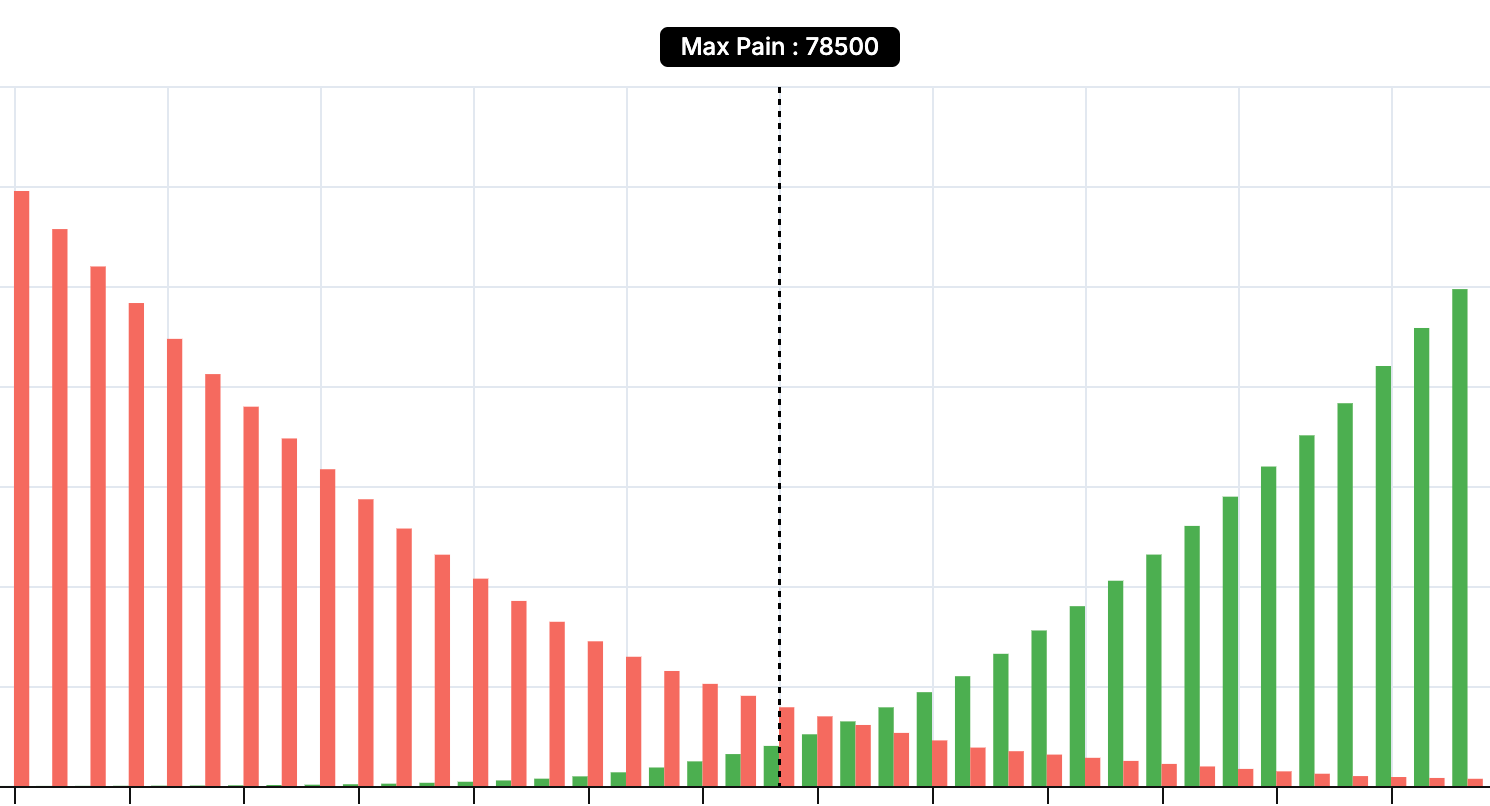
Our tool calculates the ICICIBANK max pain level in real time by summing the total open interest value on the call and put sides for every strike, then identifying the strike where the combined loss to option holders is highest. We also surface the second and third most painful strikes, which traders can watch as alternate magnets if spot diverges from the primary level. In live mode, you can see how the max pain strike shifted through the expiry cycle and whether the final settlement landed near it.
How to trade ICICIBANK around max pain
Option sellers use ICICIBANK max pain to structure strangles and iron condors around the pain point, expecting spot to stay in range. Directional traders read it another way: if spot is far from max pain early in the expiry, a move back toward it can be a high-probability setup. Max pain is most reliable on liquid ICICIBANKmonthly expiries and in the final week of the cycle. It's weakest in the first week, when the OI distribution is still forming.
Combine max pain with our Put-Call Ratio, Open Interest Analysis, and Live Option Chain tools for complete ICICIBANK expiry positioning insight on NSE F&O.
Frequently Asked Questions - Max Pain Analysis
Everything you need to know about Max Pain for NIFTY
Max Pain for NIFTY is the strike price at which the maximum number of options (both calls and puts) would expire worthless, causing maximum financial loss to option holders and maximum profit to option writers. This level represents the theoretical price where market makers and option writers would prefer the underlying to settle at expiration.
Max Pain for NIFTY is calculated by determining the strike price that would result in the lowest total value of outstanding options at expiration. The calculation involves:
1. Call Pain Calculation: For each strike below the current price, multiply the open interest by the intrinsic value difference
2. Put Pain Calculation: For each strike above the current price, multiply the open interest by the intrinsic value difference
3. Total Pain: Sum of call pain and put pain for each strike price
4. Max Pain Strike: The strike with the minimum total pain value
Our system processes real-time open interest data for NIFTY to provide accurate Max Pain calculations updated every minutes during market hours.
Max Pain is crucial for NIFTY trading because:
• Price Gravitational Effect: NIFTY tends to gravitate toward the Max Pain level as expiration approaches
• Market Maker Influence: Large option writers often have significant influence on underlying price movement
• Risk Management: Helps traders understand where institutional money is positioned
• Expiry Strategy: Critical for weekly and monthly expiry trading strategies
• Sentiment Analysis: When NIFTY trades significantly above or below Max Pain, it indicates strong directional bias
This analysis helps in making informed trading decisions.
When NIFTY price deviates from Max Pain:
Above Max Pain:
• Bullish sentiment - buyers are in control
• Call option writers may face losses
• Market may resist moving higher due to gamma hedging
• Often indicates strong upward momentum
Below Max Pain:
• Bearish sentiment - sellers dominate
• Put option writers may face losses
• Market may resist moving lower due to gamma hedging
• Often indicates strong downward pressure
Near Max Pain:
• Neutral sentiment - balanced market
• High probability of price gravitating toward Max Pain at expiry
• Lower volatility expected
NIFTY Max Pain data is updated with the following frequency:
Historical Mode:
• End-of-day data for selected historical dates
• Complete historical analysis available for backtesting
To get a complete picture of NIFTY options market, use these complementary tools:
Track option open interest changes and build-up patterns for NIFTY
Analyze Put-Call parity and premium differences for NIFTY options
Real-time option chain with Greeks and implied volatility for NIFTY
Monitor PCR trends and market sentiment indicators for NIFTY
Pro Tip: Use Max Pain alongside Open Interest and PCR analysis for comprehensive NIFTY options strategy development.
Max Pain is not a direct price prediction tool, but provides valuable insights for NIFTY:
What Max Pain CAN do:
• Indicate potential support/resistance levels around the Max Pain strike
• Show where option writers prefer NIFTY to settle
• Identify unusual option activity and institutional positioning
• Help time option entries and exits
What Max Pain CANNOT do:
• Predict exact price movements or direction
• Account for sudden news or market events
• Override strong fundamental or technical factors
• Guarantee price will reach Max Pain level
Best Practice: Use Max Pain for NIFTY as one component of a comprehensive analysis including technical analysis, market sentiment, and fundamental factors.
Effective NIFTY options trading strategies using Max Pain:
Strategy 1 - Mean Reversion:
• When NIFTY is far from Max Pain, expect price to move toward the Max Pain strike
• Sell options with strikes away from Max Pain
• Buy options with strikes near Max Pain
Strategy 2 - Expiry Week Trading:
• Monitor how close NIFTY is to Max Pain before expiry
• Adjust positions based on probability of reaching the Max Pain strike
• Use for iron condor and butterfly strategies
Strategy 3 - Risk Management:
• Avoid selling options when NIFTY is very close to Max Pain
• Use Max Pain as a reference for stop-loss levels
• Monitor changes in Max Pain throughout the trading session
Always combine Max Pain analysis with proper risk management and position sizing.
Need more help with options trading strategies?
ICICI Bank Ltd (ICICIBANK) Max Pain: The Gravitational Pull Explained
Is there really a "gravitational pull" toward ICICIBANK Max Pain?
Yes — but it is not magic. The pull comes from the way option writers (market makers, institutional desks) hedge their exposure. When they are net short puts at a ICICI Bank Ltd strike, they need to buy the underlying if ICICIBANK falls toward that strike (to stay delta-neutral). When they are net short calls, they sell the underlying if ICICIBANK rises toward the call strike. This two-sided hedging naturally dampens moves toward strikes where the writer exposure is highest — typically the Max Pain level.
When is the ICICIBANK pull strongest?
The gravitational pull on ICICIBANK is strongest in the final 2-3 trading sessions before expiry. Earlier in the expiry cycle, other forces (news, earnings, global cues) dominate and Max Pain has less influence. In the last few days, as time value collapses and hedging activity peaks, the pull can become obvious. The strongest cases are when ICICI Bank Ltd price is already close to Max Pain and volatility is moderate. Strong trends or surprise events can easily overpower the pull.
Why the ICICIBANK pull fails sometimes
Max Pain is not a rule — it is an observed tendency. It fails when: 1) a major event or news surprise creates directional pressure that overwhelms hedging flows, 2) the ICICIBANK trend is very strong (momentum beats mean-reversion), 3) OI is thin or poorly distributed, or 4) global macro shocks override Indian market dynamics. Failures are common enough that you should never treat Max Pain as a guarantee — treat it as a probabilistic reference that increases your edge, not eliminates your risk.
Practical use of the pull on ICICIBANK
As of 6 October 2026, use the gravitational pull as a directional bias, not a certainty. If ICICI Bank Ltd is trading above Max Pain in expiry week, lean slightly short-biased on your trade setups. If it is trading below, lean slightly long-biased. Combine this bias with price action confirmation before entering. If you get a short setup on price charts AND Max Pain is below current price, the combined setup has an edge. If they contradict each other, stand aside.
ICICI Bank Ltd (ICICIBANK) Max Pain: The Role of Market Makers
Who are market makers and why do they matter for ICICIBANK Max Pain?
Market makers provide liquidity on both sides of the ICICI Bank Ltd options market. They quote bid and ask prices for calls and puts, earning a small spread on every trade. To manage their risk, they hedge their positions using the underlying — buying or selling ICICIBANK futures or cash to stay delta-neutral. It is their hedging activity that creates most of the Max Pain pull. Without market makers systematically hedging, Max Pain would have no physical mechanism to act on price.
How delta hedging creates the ICICIBANK pull
When a market maker is net short puts at a ICICIBANK strike, they are "long delta" — they profit if ICICIBANK rises. To neutralise this, they sell ICICIBANK to offset the exposure. As ICICI Bank Ltd price approaches the put strike, their net delta changes, and they must sell more to stay neutral. This selling creates downward pressure. The opposite happens with short calls — as price approaches the call strike, they buy ICICIBANK to neutralise their rising short exposure, adding upward pressure. The result is a two-sided dampening force that keeps price near the strike with the least net risk, which is often the Max Pain level.
Why this mechanism is stronger near ICICIBANK expiry
Near expiry, the gamma of option positions increases sharply. Gamma is the rate at which delta changes as price moves. High gamma means market makers must hedge more aggressively — small price moves require bigger hedging trades. This amplifies the Max Pain pull in the final days. Earlier in the cycle, gamma is lower and hedging is gentler, so the pull is weaker. This is why Max Pain matters most in the last 2-3 sessions before expiry.
What can override the ICICIBANK market maker pull
Market maker hedging is powerful but not unlimited. It can be overridden by: very large directional order flow (big institutional buy or sell programs), news events that create panic buying or selling, global market moves that dominate domestic positioning, or sudden volatility spikes. In these cases, the Max Pain pull is real but smaller than the opposing force. As of 6 October 2026, understanding the mechanism helps you judge when Max Pain will work and when it will not for ICICI Bank Ltd.
ICICI Bank Ltd (ICICIBANK) Max Pain: Frequently Asked Questions
What is Max Pain in simple terms?
Max Pain for ICICI Bank Ltd is the strike price where the total loss to option buyers (calls and puts combined) would be highest at expiry. Equivalently, it is the strike where option sellers pay out the least. It is calculated from real-time open interest and is displayed as a reference line in the ICICIBANK Max Pain tool. Prices often drift toward this level as expiry approaches because of market maker hedging.
Is Max Pain 100% accurate for ICICIBANK?
No. Max Pain is accurate roughly 55-60% of the time within a 1% band for ICICI Bank Ltd monthly expiries, and slightly less for weeklies. That is better than random but not reliable enough to trade blindly. Always combine Max Pain with price action, OI concentration, and market context before taking a trade.
How does ICICIBANK Max Pain update?
In live mode, the ICICIBANK Max Pain value updates continuously as OI changes during NSE market hours (9:15 AM to 3:40 PM IST). Every new contract that is created or closed can shift the calculation slightly. You do not need to refresh the page — the number updates automatically. Historical mode shows the end-of-day Max Pain for any past trading date.
Can beginners use the ICICIBANK Max Pain tool?
Yes. The Max Pain concept is simple and the tool is visual. Beginners should start by using Max Pain as a reference point rather than a trade trigger. Note where it is, check whether ICICI Bank Ltd price is near it or far from it, and use this context to frame your other analysis. As you gain experience, you can incorporate Max Pain into more active strategies. As of 6 October 2026, even simple usage adds value to beginner trade planning.
ICICIBANK distance from max pain: quick reference
| Spot vs max pain | Positioning | Common reading |
|---|---|---|
| More than 2% above | Call writers under pressure | Strong bullish momentum; trend can override the magnet |
| 0.5% to 2% above | Mild bullish premium | Drift back toward the strike likely as expiry nears |
| Within ±0.5% | Pinned at max pain | Range-bound zone; fastest premium decay, favours sellers |
| 0.5% to 2% below | Put writers under pressure | Mild bearish tilt; upward pull toward ICICIBANK max pain |
| More than 2% below | Strong bearish momentum | Downtrend in control; wait for OI confirmation before fading |
These distance bands are rules of thumb from NSE weekly and monthly expiry behaviour, not fixed thresholds. ICICIBANK's own volatility decides how meaningful a given gap is. The pull toward max pain is weakest early in the expiry cycle and strongest in the final two sessions, and the live chart above recalculates the strike every minute so you can track the gap in real time.
How StockMojo calculates the ICICIBANK max pain level
For every strike in the ICICIBANK option chain, StockMojo assumes expiry at exactly that strike and sums the payout all in-the-money calls and puts would owe, weighted by each contract's open interest. Whichever strike leaves writers with the smallest total payout, and buyers with the largest combined loss, is the ICICIBANK max pain level.
The calculation runs on open interest only: strikes with zero OI contribute nothing, and recent volume is not weighted, so a level built weeks ago counts the same as one built today. During NSE market hours (09:15 to 15:40 IST) the level recalculates every minute from the live option chain, and it can shift meaningfully intraday as positions build and unwind.
Outside market hours the tool shows the last traded session's level. Historical mode replays how the ICICIBANK max pain strike moved through past expiry cycles, so you can compare it against where each expiry actually settled.
How to use the StockMojo Max Pain tool
- Select an index or stock — Pick Nifty, BankNifty, FinNifty, or any F&O stock from the symbol selector at the top of the tool.
- Choose an expiry — Select the expiry you want to analyze: current week, next week, or monthly. The tool defaults to the nearest expiry.
- Read the highlighted max pain strike — The strike with the lowest total writer loss is highlighted. This is the level where option buyers as a group lose the most.
- Compare with current spot price — Look at the difference between max pain and the live underlying price. A large gap creates a stronger 'magnet' setup as expiry approaches.
- Cross-check with PCR and OI buildup — Open the Put Call Ratio and Open Interest tools alongside max pain. Use them together to confirm directional bias before placing a trade.
ICICIBANK Max Pain — Frequently Asked Questions
What is ICICIBANK max pain today?
Max pain for ICICIBANK is the strike price where option buyers collectively lose the most if the contract expires there. Put another way, it's the strike where option writers pay out the least. The tool above computes it live from the ICICIBANK NSE option chain open interest and highlights the current max pain strike along with the pain distribution across nearby strikes.
How is ICICIBANK max pain calculated?
For every strike in the ICICIBANK option chain, the calculator assumes expiry at that strike and sums the intrinsic value all in-the-money calls and puts would pay out, weighted by open interest. Whichever strike leaves writers with the smallest total payout (and buyers with the largest combined loss) is the ICICIBANK max pain level. It recalculates as OI shifts.
Does ICICIBANK expire at the max pain strike?
Not always, but it lands close often. On liquid NSE expiries, ICICIBANK tends to settle within about 1% of the max pain strike in a majority of normal weeks, because option writers hedge to defend the zone of least payout. Event weeks (RBI policy, budget, results) routinely break the pattern, so treat max pain as a magnet, not a guarantee.
What does it mean when ICICIBANK trades above or below max pain?
When ICICIBANK trades well above max pain, call writers are under pressure and a drift back toward the strike becomes more likely as expiry nears. Trading well below it flips the pressure onto put writers, so the pull works upward instead. Near the strike itself, premiums decay fastest, which favours option sellers. That's why the gap between spot and max pain makes a quick expiry-bias gauge for ICICIBANK.
How often does ICICIBANK max pain update?
During NSE market hours (9:15 AM to 3:40 PM IST) the ICICIBANK max pain level recalculates every minute from live option chain open interest, so the strike can shift intraday as positions build and unwind. Outside market hours the tool shows the last traded session, and historical mode replays max pain for past ICICIBANK expiries.