SENSEX Implied Volatility (IV) Chart | Live Intraday ATM IV
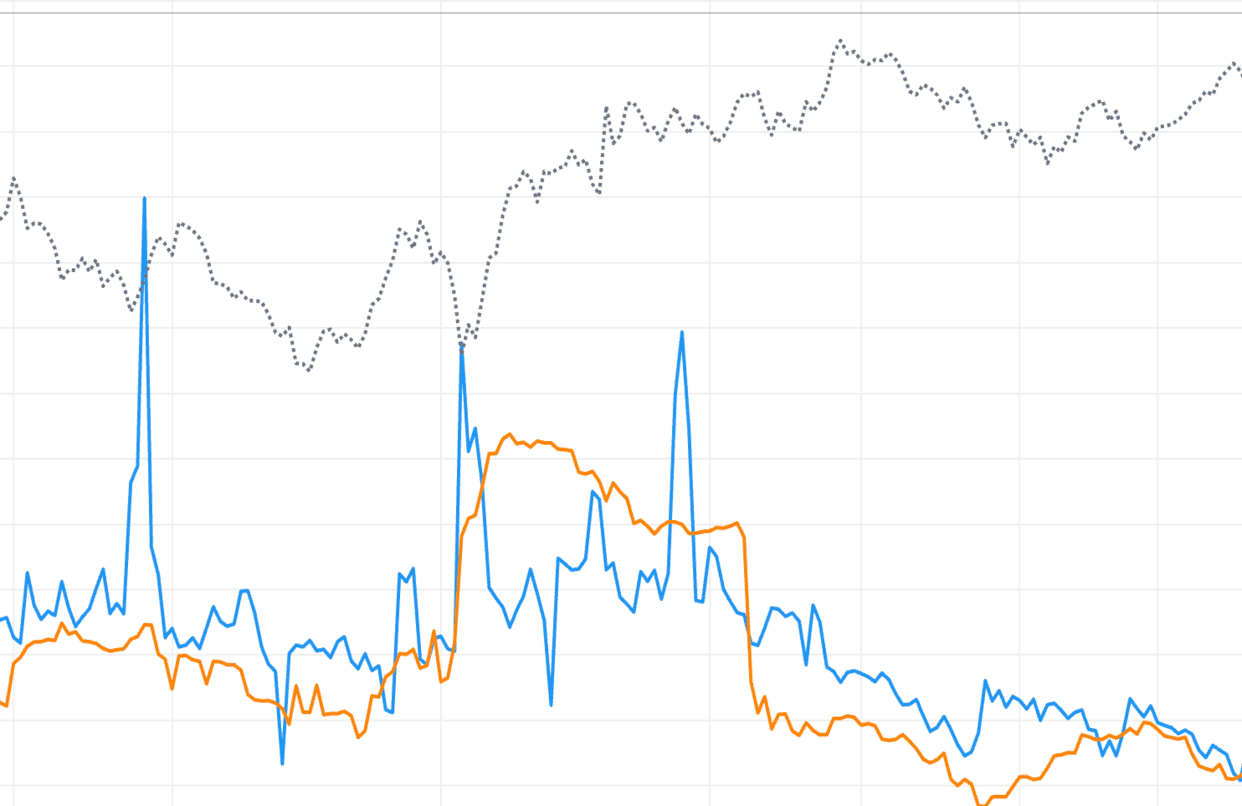
Track intraday ATM implied volatility for SENSEX. IV is solved every minute from the at-the-money call and put premiums against the synthetic future, giving a clean, real-time read of how much the option market expects SENSEX to move. The future price is overlaid so you can see volatility and price together.
Use the SENSEX IV chart to spot volatility expansion and crush as they happen. Rising IV means options are getting more expensive — be cautious buying. Falling IV means premium is deflating — favourable for sellers. Live mode refreshes SENSEX IV every minute through the NSE session.
Combine with our Straddle Chart, IV/HV/IVP Chart, and Live Option Chain for complete SENSEX volatility analysis on NSE F&O.
BSE Sensex (SENSEX) IV Chart: Near vs Far Expiry IV
Switching SENSEX expiries
Select different expiries to compare how BSE Sensex ATM IV behaves across the curve. Near-term IV reacts hardest to immediate events; far-term IV is steadier and reflects the broader volatility regime.
Reading the SENSEX term structure
When near-term IV sits well above far-term IV (backwardation), the market sees imminent event risk for SENSEX. When far-term IV is higher (contango), near-term conditions are calm. Comparing expiries on this chart reveals which regime you are in.
Strategy implications for SENSEX as of 17 September 2026
Steep near-term IV favours short-dated premium selling into the event and the subsequent crush. Calm near-term IV with elevated far-term IV can favour longer-dated buys. Switch expiries to read BSE Sensex term structure before choosing.
BSE Sensex (SENSEX) Implied Volatility Chart: Frequently Asked Questions
Is SENSEX IV here intraday or daily?
It is intraday. The BSE Sensex IV line is rebuilt minute by minute from ATM option premiums for the selected expiry, unlike daily IV-rank tools that show one value per day. Use it for in-session timing.
What is a normal SENSEX IV level?
Normal depends on conditions. As a major Broad Market index on BSE, BSE Sensex ATM IV is often in the low-to-mid range during calm periods and spikes well above it around RBI policy decisions, the Union Budget, election results, and US Fed meetings. Read today's level against the session, not an absolute benchmark.
Which tools pair with the SENSEX IV chart as of 17 September 2026?
Pair it with the BSE Sensex straddle chart (premium effect of IV), the IV/HV/IVP chart (daily rank and percentile), and the volatility-skew tool (IV across strikes) for a complete volatility view.
BSE Sensex (SENSEX) IV Chart: Common Mistakes
Mistake: ignoring the event calendar
BSE Sensex IV trades very differently around events. Elevated IV before RBI policy decisions, the Union Budget, election results, and US Fed meetings is not simply expensive — it is priced for the expected move. Selling it exposes you to event risk; buying it risks the crush. Always check what is scheduled.
Mistake: reacting to a single tick
A one-minute IV blip, especially near expiry, can be noise. Look for a sustained 5-15 minute trend in the SENSEX IV line before acting. Direction and persistence matter more than any single point.
Mistake: trading IV without price context as of 17 September 2026
IV in isolation is incomplete. Always read the BSE Sensex IV line against the overlaid future price. The combination — not IV alone — is what reveals divergences and confirms signals.
SENSEX intraday IV patterns: quick reference
| IV line pattern | What it means | Common trading read |
|---|---|---|
| Steady rise through the session | IV expansion — bigger moves being priced in | Premiums inflating; buying SENSEX options gets expensive late |
| Sharp vertical drop | IV crush after an event resolves | Sellers capture the collapse; buyers lose extrinsic value fast |
| Rising IV, flat future price | Options market bracing for a move price hasn't made | Classic pre-breakout alert; tighten risk on short premium |
| Falling IV, rising future price | Calm, confident rally | Continuation read; favours short-premium strategies |
| Elevated at open, drifting lower | Overnight gap risk being unwound | Range-bound day likely; theta plus falling IV aids sellers |
| Jumpy line near expiry close | Time-to-expiry collapse destabilises the IV solve | Noise, not signal — treat late expiry-day IV with caution |
These patterns describe how the premium-derived ATM IV line typically behaves inside a single NSE session — tendencies, not guarantees. The live SENSEX chart above re-solves IV from the ATM call and put premiums every minute, with the future price overlaid, so you can match today's tape to a pattern before committing to a trade.
How to use the StockMojo Implied Volatility Chart
- Select an underlying — Choose Nifty, BankNifty, Sensex, or any F&O stock from the symbol selector.
- Pick live or historical — Use live mode for the current session (auto-refreshing each minute) or historical mode to replay a past trading day.
- Choose an expiry — Select the expiry whose ATM IV you want to track. Near-term expiries react hardest to events; far-term IV is steadier.
- Read the IV line — Watch the IV line for expansion (rising premium expectations) or crush (falling). Note where current IV sits versus earlier in the session.
- Compare IV with the future — Use the overlaid future price to spot divergences — for example IV climbing while price is flat, a classic pre-breakout signal.
SENSEX Implied Volatility Chart — Frequently Asked Questions
What is SENSEX implied volatility (IV)?
SENSEX implied volatility is the market's expectation of future movement, back-solved from ATM option premiums. This chart computes ATM IV every minute from the call and put prices and the synthetic future, so high IV means options are expensive and low IV means they are cheap.
How is SENSEX ATM IV calculated here?
For each minute, the ATM call and put premiums are fed into the Black-Scholes model against the synthetic future (Strike + Call − Put). Because the option is priced on the forward, call IV and put IV match, so a single IV line is plotted alongside the SENSEX future price.
What does an intraday SENSEX IV spike mean?
A sudden IV rise means the market is pricing in more movement — often ahead of an event or during a fast move. After the uncertainty resolves, IV usually crushes back down. Watching SENSEX IV intraday helps you avoid buying expensive options and time premium selling.
How is this SENSEX IV chart different from the daily IV/HV/IVP chart?
This chart is intraday: SENSEX ATM IV is re-solved from option premiums every minute of the session, per expiry. The IV/HV/IVP chart is daily — one end-of-day IV value with IV Rank, IV Percentile and historical volatility over months. Use this tool for in-session timing and the daily chart to judge whether today's SENSEX IV is high or low overall.
How often does the SENSEX implied volatility chart update?
During NSE market hours (9:15 AM to 3:40 PM IST) the SENSEX IV line refetches roughly once a minute and redraws the latest ATM IV point. Outside market hours the chart shows the last completed session, and historical mode lets you replay intraday SENSEX IV for any past trading day and expiry.