SBIN ATM IV Term Structure | Live Implied Volatility Across Expiries
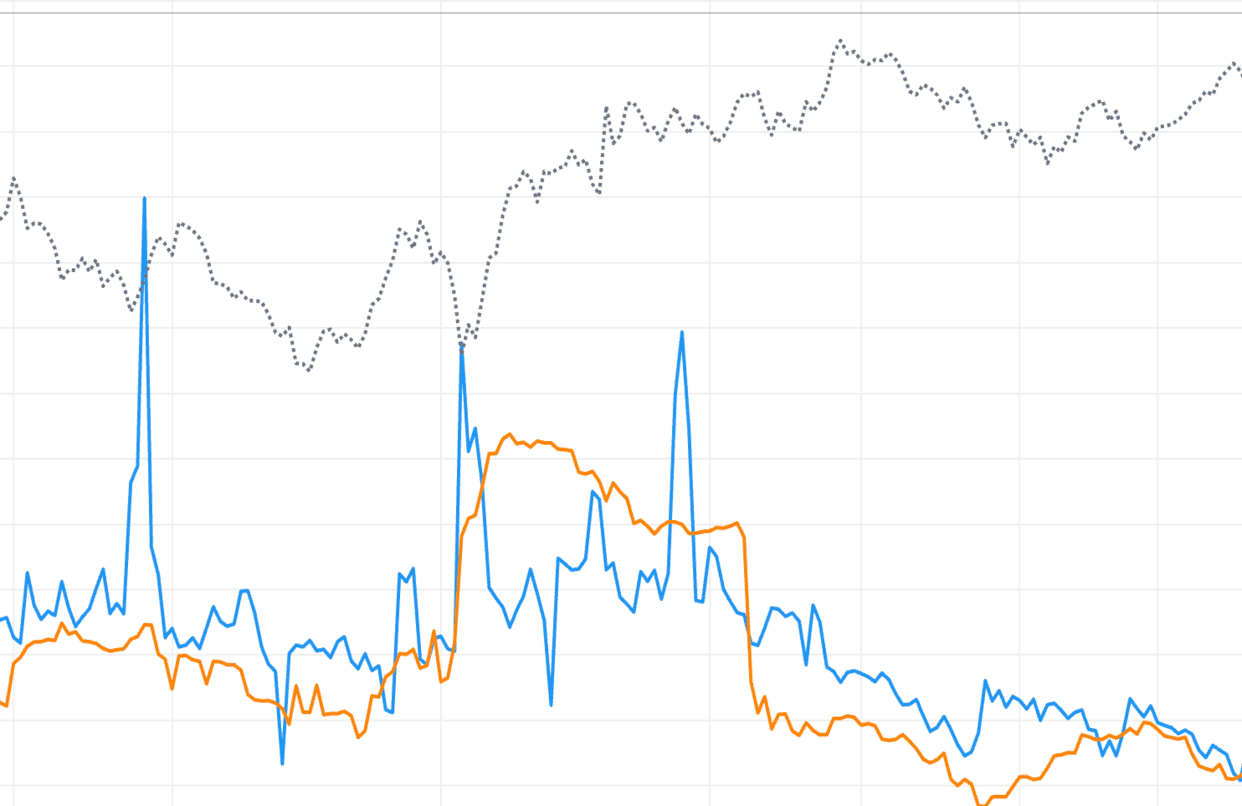
The SBIN ATM IV term structure shows at-the-money implied volatility for every listed expiry on a single curve, from the nearest weekly out to the farthest month. Each point is the ATM IV solved from that expiry's option premium against the synthetic future, so the curve reveals how the market prices SBIN volatility across the whole calendar rather than at a single tenor the way India VIX does.
An upward slope (contango) is the normal calm-market state; a downward slope (backwardation), where near-term IV sits above far-term IV, signals acute short-dated stress around an event or a selloff. A sharp bump at one SBIN expiry usually marks an event — results, Budget, RBI policy or a Fed meeting — landing in that expiry, and its height is the market's estimate of the move. Live mode keeps the SBIN term structure updated across all active expiries through the NSE session.
Combine the term structure with our Intraday IV Chart, Volatility Skew, and IV/HV/IVP Chart for the full SBIN volatility picture.
State Bank of India (SBIN) IV Term Structure: Calendar & Diagonal Spreads
Why the SBIN curve drives calendars
Calendar and diagonal spreads are pure plays on the term structure: sell the expensive (high-IV) State Bank of India expiry and buy the cheap (low-IV) one at the same strike. The curve tells you which expiry is rich and which is cheap, so you can structure the spread with the term structure on your side.
When a long SBIN calendar works
A long calendar performs best when front-month SBIN IV is low and the back month is firm or rising — a steep contango front. You collect the faster decay on the near leg while the far leg holds its value, profiting from the slope rather than direction.
Event-driven SBIN spreads as of 27 July 2026
When backwardation lifts the near expiry, sell that rich leg against a cheaper far-dated option. The classic exit is to close once the event passes and front IV crushes back into contango — capturing the volatility differential the State Bank of India curve laid out.
State Bank of India (SBIN) IV Term Structure: Event Kinks
How events bump the SBIN curve
A discrete event inflates implied volatility only in the expiry that brackets it, while the expiries before and after stay at baseline — so a single State Bank of India date pops above the smooth curve. The kink is localised, which makes it easy to see exactly which expiry the market is pricing risk into.
Which SBIN events to watch
As a NIFTY and BANKNIFTY and FINNIFTY constituent, the bump usually marks the expiry holding quarterly results, board meetings, and major corporate announcements. Mark the calendar and the kink will line up with the date, telling you which expiry carries the event premium for SBIN.
Sizing the implied move on SBIN
The height of the bump is the market's estimate of the event's move. Compare it against State Bank of India's past reactions to the same type of event to judge whether the market is over- or under-pricing it — a direct read you can act on before the date.
State Bank of India (SBIN) IV Term Structure: Backwardation & Inversion
What backwardation looks like on SBIN
Backwardation is an inverted State Bank of India curve — near-term IV sits above far-term IV. The nearest expiries become the most expensive in volatility terms, which is the opposite of the normal contango shape.
Why SBIN inverts
Two forces invert the curve: stress (a selloff, where traders bid up near-term puts for protection) and events (a known catalyst that resolves on a specific date). Either way, the market is pricing acute short-dated risk for SBIN that it does not expect to persist.
Trading SBIN backwardation as of 27 July 2026
Backwardation tends to mean-revert: once the near-term event passes, front IV crushes and the State Bank of India curve snaps back to contango. That makes the rich near-term expiry a sell candidate — against a cheaper far leg — with the standard rule to close the spread once IV normalises rather than holding to expiry.
SBIN IV term structure shapes: quick reference
| Curve shape | Volatility state | Common reading |
|---|---|---|
| Steep contango (far IV well above near) | Calm front, term premium further out | Quiet near-term SBIN; long calendars carry well |
| Mild contango (gentle upward slope) | Normal, no imminent catalyst | Baseline state on most NSE sessions; no term signal |
| Flat curve | Transition zone | Near-term risk building; watch for a flip to inversion |
| Backwardation (near IV above far) | Acute short-dated risk priced | Event or selloff stress; rich front expiry tends to mean-revert |
| Single-expiry bump (kink) | Event premium in one expiry | Budget, RBI, results or earnings in that expiry; bump height sizes the implied move |
These shapes are regimes, not fixed signals — contango dominates calm markets and backwardation tends to mean-revert once the near-term event passes and front IV crushes. The live SBIN curve above recalculates each expiry's ATM IV through the NSE session, so you can watch the slope flip between regimes in real time.
How to use the StockMojo ATM IV Term Structure
- Select an underlying — Choose Nifty, BankNifty, Sensex or any F&O stock from the symbol selector. Each point on the curve is that symbol's ATM IV for one expiry.
- Pick live or historical — Use live mode for the current term structure across all active expiries, or historical mode with a date to rebuild that session's end-of-day curve.
- Read the slope — An upward slope (contango) is the calm, normal state. A downward slope (backwardation), where near-term IV is highest, flags imminent risk.
- Spot the kinks — A single expiry popping above the curve marks an event landing in that expiry — Budget, RBI policy, results or a Fed meeting. The bump sizes the expected move.
- Position with spreads — Sell the richest expiry and buy the cheapest at the same strike for a calendar or diagonal, then close once the near-term event crushes IV back into contango.
SBIN ATM IV Term Structure — Frequently Asked Questions
What is the SBIN ATM IV term structure?
The SBIN ATM IV term structure plots at-the-money implied volatility for every listed expiry on one curve. Each point is the annualised volatility the market is pricing for that horizon, so the shape shows how SBIN expected volatility changes with time to expiry — the whole curve, not a single tenor like India VIX.
How do you read SBIN contango and backwardation?
An upward-sloping SBIN curve is contango — the normal, calm state where far-dated IV is higher. A downward slope is backwardation, where near-term IV sits above far-term IV, signalling imminent risk from an event or a selloff. Backwardation tends to mean-revert to contango once the near-term event passes and front IV crushes.
Why does the SBIN curve bump at one expiry?
A discrete event inflates IV only in the expiry that brackets it, so a single SBIN expiry pops above the smooth curve while the others stay at baseline. It usually marks the Budget, an RBI policy decision, election results or earnings landing in that expiry, and the height of the bump is the market's estimate of the move.
How do traders trade the SBIN IV term structure with calendar spreads?
Calendar and diagonal spreads trade the SBIN curve directly: sell the expensive high-IV expiry and buy the cheap low-IV one at the same strike. A long calendar works best in steep contango when front IV is low; an event-driven backwardation lets you sell the rich near expiry against a cheaper far leg, closing once front IV crushes back into contango.
How often does the SBIN IV term structure update?
Live mode keeps the SBIN term structure updated across all active NSE expiries through market hours (9:15 AM to 3:30 PM IST), recalculating each expiry's ATM IV from the option chain. Historical mode rebuilds the end-of-day curve for any past session, so you can replay how the SBIN shape shifted into and out of events.